01
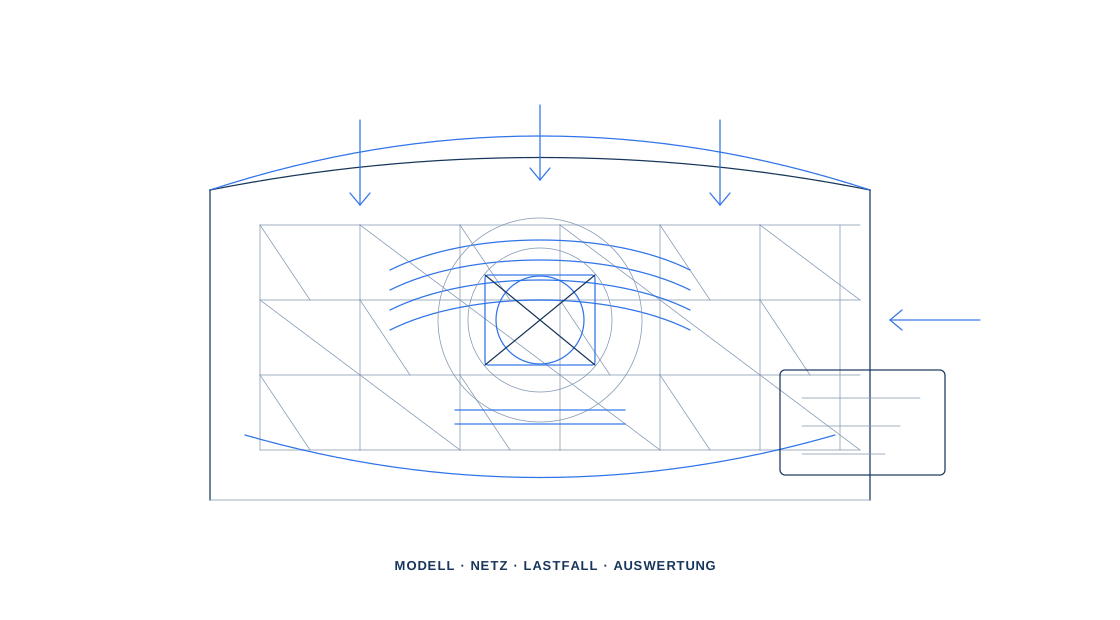
Finite-element analysis
Numerical investigation of complex geometry, components and load paths.
Dynamic actions, seismic design, fatigue, mode shapes, service-life analysis and complex finite-element calculations.
Make complex structural behaviour visible and verifiable
Geometry, material, supports and contacts are translated into a robust and interpretable model.
 FEA · DYNAMICS · FATIGUE · SPECIAL LOAD CASES
When simplified models are insufficient, structural behaviour, local stresses and dynamic effects are investigated using tailored analytical models. The objective is a reliable and clearly documented basis for decisions.
Numerical investigation of complex geometry, components and load paths.
Assessment of time-dependent actions and vibration-sensitive systems.
Verification and assessment of special load cases under project-relevant technical rules.
Assessment of repeated actions and constructive details.
Send available documents and a short brief. We will clarify the appropriate scope.